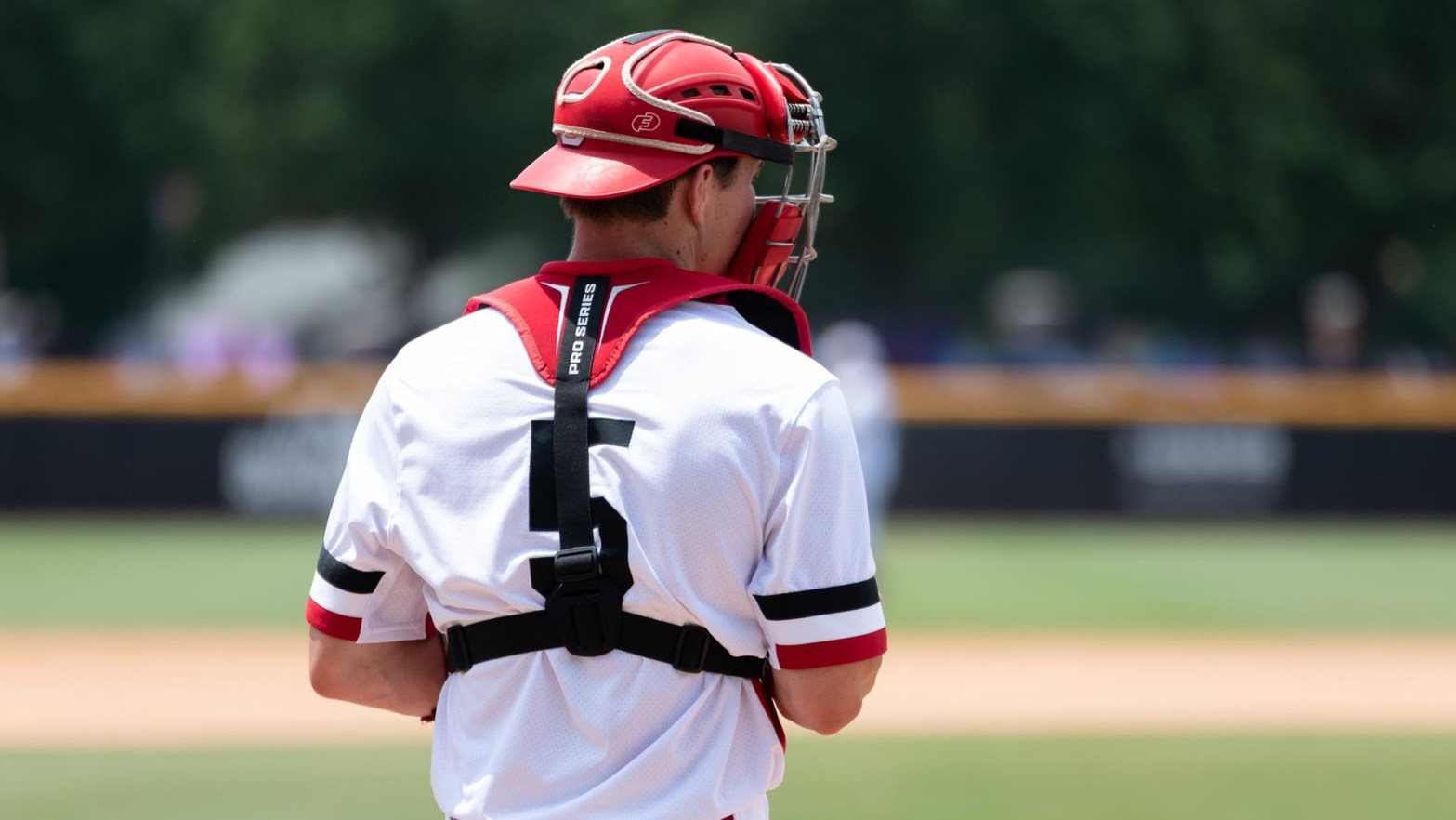
Selecting Patrick Bailey 13th overall in the 2020 MLB Entry Draft, the Giants find themselves in an enviable position: more than enough young talent behind the plate. With top prospect Joey Bart and the aforementioned Bailey catching in the minor league system, San Francisco will surely have a high quality catcher to fill the enormous cleats that will be left behind by the great Buster Posey. Rather than pit the two skilled young catchers against one another, I would rather highlight their strengths and weaknesses separately, starting with Bailey.
Starting three full seasons at North Carolina State University, the Greensboro native crushed college pitching and performed incredibly well behind the plate from day one. With 14 long-balls in 2018, Bailey set the Wolfpack record for freshman home runs while providing value at a position much more well known for defense than offense. Slashing .302/.411/.568 with 29 home runs in only 131 games over a storied career, Bailey was well on his way to another double-digit home run season, with 6 home runs in the COVID-shortened 17 game 2020 NCAA Baseball season (21 home run pace over a full season). While his bat is eye catching, his bread and butter is his defense, as one of the catchers college baseball’s potential base-stealers feared more than any other.
29 home runs over 131 games is some undeniable pop, but hitting for power isn’t something I can comfortably project Bailey to do at an above-average level. As a switch hitter, he has a different approach from either side of the plate, only prioritizing power hitting from the left side of the plate. He takes advantage of aluminum bats and overall weaker pitching in a way that shouldn’t quite translate to immense power in Major League Baseball. His bat speed isn’t anything extraordinary. The power here comes from the ability to square up the ball well and carry through his swing consistently. While this skill is quite a good one to have, he should only be a 15-20 home run hitter in the MLB, with 25 sitting beyond his expectations and 30 dingers a season being a plausible outer limit for a hitter of his ability. Power potential: 45.
Consistently squaring the ball up does plenty more than supply a hitter with a decent number of home runs. In Bailey’s case, it should improve the profile of an already skilled contact hitter, making him a threat in the gaps to go with his ability to get the ball in play. As mentioned above, Bailey’s switch-hitting lends to power from the left side, but he utilizes that power from the right side of the plate to knock line drives acoss the playing field. The player lovingly nicknamed Patty Barrels should be able to provide decent value with a hit tool that will lend to plenty of singles and doubles, though batting average on ball in play variability will have great effects on his contributions to his offense. Hit potential: 55.
Freshmen don’t start behind the plate at an ACC university without quality defense. Patrick Bailey is no exception to that rule. As an amateur, Bailey’s defensive chops have been among the best of his peers at all levels. He handles the ball well, with 7, 5, and 1 errors in each of his seasons as a collegian. A .988 fielding percentage is a quality level of handling as an amateur, and he pairs that well with good framing, turning plenty of balls into strikes with his glove. He grades out to be a plus player with the kind of glove MLB teams covet at such a premium position, with bonus points for calling his own games and doing a good job of it. Glove potential: 60/65.
An in-game pop time that hangs around 1.95 seconds is perfectly average amongst MLB catchers, and that’s what Bailey managed at North Carolina State. He still has some room to pick up a little extra velocity, but average to just above average is about what you should expect from the 21-year-old’s development track in terms of pop time. When he throws down, he hops up to what is essentially a standing position to throw, which does slow down his release. If he could throw from an earlier point in his motion rather than bouncing all the way up, he could shave off a few hundreths of a second, but he would have to find a way to make that throw without sacrificing any velocity. We have seen a few throws with these lower release points, and they do lead to some of his best pop times with the Wolfpack. His arm’s primary attribute is accuracy. He does not miss on a lot of throws down to second, and when he makes that throw he excels at placing the ball on the right side of the second base bag, right where you’d want that ball to place a quick tag. This is already a great skill, and it will likely only grow between now and his major league career. Arm potential: 55/60.
“With the Wolfpack, almost 29.6% of his ball in play hits were for extra bases…”
on Bailey’s gap power and good baserunning instincts
As to be expected with a catcher, speed does not act as a weapon for Bailey. With only two stolen bases in college and the speed normally expected from a catcher with two steals in three seasons, basestealing will not even be an aspect of his game. The majority of ways speed directly influences his abilities on the diamond is on batted balls in play, whether it be attempting to beat out infield grounders or leg out extra bases on a ball that gets out of the infield. With the Wolfpack, almost 29.6% of his ball in play hits were for extra bases, which is above average for a catcher. Of those extra base hits in play, 6 of his 34 were triples, a ratio of 17.6% that is also above average for a catcher. As he continues to grow into his 6’2, 207 lb frame, his speed should hand just a tad above average at the position, but amongst all MLB players is well below average. Speed potential: 35.
As a do-all catcher with quality contact and defense, I have no doubt that Bailey will be a good professional catcher. As a switch-hitter, he provides a level of versatility that should allow him to be a 120-game starter behind the dish. Though he has said his catching role model is the Cardinals’ Yadier Molina, as a college semi-finalist for the Buster Posey Award, being drafted to potentially fill the role currently possessed by Buster Posey, and showing off good framing and contact hitting, it’s only right that my pro comparison for Patrick Bailey is that of a Buster Posey-lite. He should be a first or second tier starter in Major League Baseball. Pro player comparison: Buster Posey.

 You Might Know Sports